How to Take Relief in Golf (The Drop Rule)
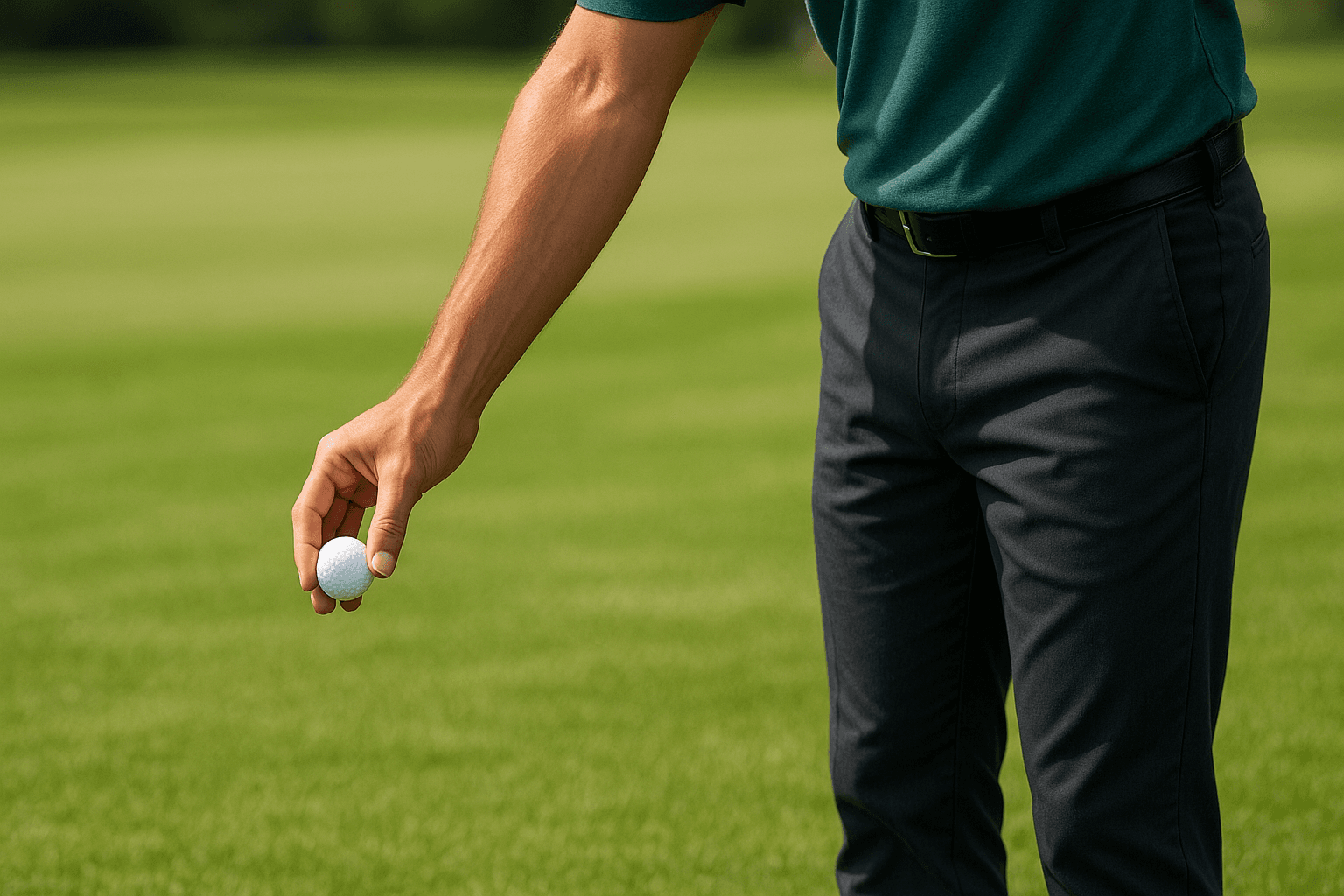
To take relief in golf, you drop the ball from knee height with your arm extended downward, and it must come to rest within the designated relief area (one or two club-lengths from the reference point depending on the rule). If the ball rolls outside the area or nearer the hole, you must re-drop once, then place it where it struck the ground on the second attempt. Playing from an incorrect drop position costs a one-stroke penalty.
What is the drop and when is it used?
The drop is the procedure for putting a ball back into play when you take relief (whether with or without penalty). Whenever a rule says "drop," you must follow this exact procedure.
The key 2019 change: from knee height, not shoulder height
Before 2019, the drop was made from shoulder height with the arm extended. Since the 2019 rulebook, the drop is made from knee height, with the arm extended downward and the ball falling from that height.
This change aims for greater precision in where the ball lands and less influence from wind or the player's position.
The full procedure
-
Determine the drop area: depending on the type of relief, the area will be 1 club length or 2 club lengths from the reference point.
-
Position yourself correctly: you may stand inside or outside the drop area when releasing the ball.
-
Release the ball from knee height: arm extended downward, the ball falls to the ground without throwing it, spinning it, or applying any effect.
-
The ball must stay within the area when it lands and rolls: if it touches the ground within the area but rolls outside, it's valid as long as it comes to rest within the area. If it comes to rest outside, you must re-drop.
When must you re-drop?
You must re-drop when the ball:
- Lands outside the drop area when it first touches the ground
- Rolls and comes to rest outside the area
- Rolls and ends up nearer the hole than permitted by the rule
- Rolls into contact with the player, caddie, or other equipment
- Rolls into a penalty area or out of bounds
- Rolls into a bunker when relief is being taken from outside the bunker
- Rolls onto the green when the ball was in the adjacent rough
If after the second drop the ball rolls to an impermissible position, it is placed (not dropped) at the point where it touched the ground the second time.
Most common drop areas
1 club length: relief from immovable obstruction, casual water, GUR, abnormal course conditions, unplayable ball lateral option.
2 club lengths: unplayable ball (lateral option) — the most common choice when, for example, a ball is stuck in a tree beside the fairway, with the reference point measured from the spot on the ground directly below the ball — and lateral relief from a red penalty area.
On a line: some unplayable ball and penalty area options require dropping on a line (a line going back from the hole through the ball position). Because the drop is the common thread running through virtually every relief rule in golf, the golf rules reference is a useful companion — it groups each scenario where you'll need this procedure by situation.
Which club do you use to measure?
Use the longest club in the bag except the putter (usually the driver). The drop area is measured with that club, regardless of which club you plan to use for the next stroke.
Common mistakes
Mistake 1: Releasing the ball from too high (habit from the old rulebook). The penalty is 1 stroke if you play the ball from that incorrect position.
Mistake 2: Not checking whether the ball has rolled outside the area. If you play it from outside the drop area without re-dropping, it's an additional penalty.
Mistake 3: Using the wrong club to measure. Always use the longest (excluding putter).
Penalty
1 stroke if you play the ball from an incorrect drop position (outside the permitted area or nearer the hole than permitted).
Frequently asked questions
What height do I drop the ball from?
You must drop from knee height with your arm extended downward — not shoulder height like the old rule. The ball falls straight down without throwing, spinning, or adding any effect.
What happens if my ball rolls out of the relief area after it lands?
If the ball first touches ground inside the area but rolls and comes to rest outside, you must re-drop. After the second drop, if it still rolls to an impermissible spot, you place it where it struck the ground on that second drop.
Which club do I use to measure the relief area?
Use the longest club in your bag except the putter — usually your driver. The relief area is measured with that club regardless of which club you plan to hit next.
How many times do I re-drop before I have to place the ball?
You get two drops total. If the second drop also rolls to an invalid position (outside the area, nearer the hole, into a penalty area, etc.), you place the ball at the spot where it first touched the ground on that second drop.
What's the penalty if I play from a bad drop?
One stroke if you play the ball from an incorrect position — meaning outside the permitted relief area or nearer the hole than allowed. The same penalty applies if you drop from the wrong height and don't correct it before playing.